
'When the mill strike started, there was crisis in every mill worker household.' 'One entire generation went without education.' 'Hunger forced them to take to crime.'

Undeterred by the stock market volatility, uncertainty due to the Ukraine-Russia war and high inflation, equity mutual funds continue to remain attractive choice for investors for the 15th straight month, registering a net inflow of Rs 18,529 crore in May on robust SIP numbers. This was higher than Rs 15,890 crore net inflow in April, data from the Association of Mutual Funds in India (AMFI) showed on Thursday. Equity schemes have been witnessing net inflow since March 2021, highlighting the positive sentiment among investors.

Major General S C N Jatar, who passed into the ages on Monday night, thwarted anti-national forces at the peak of the Assam agitation. Colonel Anil A Athale (retd) salutes this officer and gentleman.

A growth scheme not only leads to lower tax payments than the dividend option. but also allows any income that is not withdrawn to compound, explains Harsh Roongta.

The challenge for the RBI in 2024 is likely to be less about containing elevated inflation and more about curbing excessive financial market exuberance and a 'problem of plenty', notes Sajjid Chinoy, Chief India Economist JP Morgan.
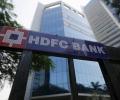
The country's most valuable lender HDFC Bank can perhaps no longer claim to be a favourite of foreign portfolio investors (FPIs). Two data indicators, both somewhat interconnected, point to this - the diminishing premium of HDFC Bank's American depositary receipts (ADRs) compared to local shares, and the ample investment opportunities available to FPIs in the domestic market. The ADR premium has shrunk to below 5 per cent, down from over 30 per cent in March 2021, and even lower than recent levels.

'If individual stocks start falling 25% to 30% or more, then I doubt how many of them will be able to withstand that (kind of selloff). That is when you'll see panic coming in.'

Investors not comfortable investing directly may take the mutual fund route, where they get exposure to a diversified portfolio of bonds.

Continuing their massive selling spree for the ninth consecutive month, foreign investors dumped Indian shares worth Rs 50,203 crore in June -- the highest net outflow in over two years -- amid aggressive rate hike by the US Federal Reserve, elevated inflation and relatively higher valuation of domestic equities. Foreign portfolio investors (FPIs) have now pulled out around Rs 2.2 lakh crore from domestic equities in the first six months of 2022 -- the highest-ever net withdrawal by them. Before that, FPIs withdrew Rs 52,987 crore in the entire 2008, data with depositories showed.

Philanthropic contributions made by India's ultra high networth individuals (net wealth of over Rs 1,000 crore), also known as UHNIs, have fallen sharply to Rs 4,230 crore in FY22, from Rs 11,821 crore the previous financial year, according to the India Philanthropy Report 2023 by Dasra and Bain & Co, which was released on Wednesday. The report says that the dramatic fall, almost by a third, was due to the fact that contributions by the Azim Premji Foundation dropped by Rs 9,000 crore due to a share buyback of Wipro, which helped the foundation to access liquidity directly. However, the report laments that even excluding the Premji Foundation's contribution, "Indian UHNI contribution has not kept pace with wealth creation" and is "below par, with a 5 per cent contraction in FY2022".

In a mixed bag for HDFC Bank ahead of the parent HDFC's merger with itself, the Reserve Bank of India has declined to make exceptions on certain aspects, and has offered some leeway on others. The country's largest private sector lender, which is aiming to conclude the merger with the home finance major by July, had written to the central bank seeking certain forbearances after announcing the $40-billion merger in April last year. In an exchange filing this evening, HDFC Bank said it received a response from RBI on Thursday and also said that there are a few pending issues.

After record fund raising, Reliance Industries now has a strong balance sheet with high liquidity that will support growth plans for its three hyper-growth engines, Jio, Retail and oil-to-chemicals, according to the firm's chairman and managing director Mukesh Ambani. In the company's latest annual report released on Wednesday, he said the company sold minority stakes in Jio Platforms -- the unit that houses its telecom and digital business -- and retail arm for almost Rs 2 lakh crore and raised another Rs 53,124 crore through rights issue.

While the Sensex fell by as much as 19 per cent from the recent peak, a host of fund houses were fully invested. A majority of the fund houses were sitting on cash amounting to 1 to 4 per cent of their portfolios against an average of 5 to 7 per cent, data from Value Research, a fund tracking company suggested.

Franklin Templeton Mutual Fund has said its six shut schemes have received Rs 15,272 crore from maturities, coupons and pre-payments since closing down in April 2020. The fund house had shut six debt mutual fund schemes on April 23 last year, citing redemption pressures and lack of liquidity in the bond market.
Sources said SBI Funds Management will distribute the proceeds to unitholders following liquidation of some securities held under the scheme.

UCO Bank mulls AT1 offering to raise Rs 1,000 cr.

Retail investors have put at least Rs 2,296 crore in listed companies facing proceedings under the Insolvency and Bankruptcy Code (IBC). A median such-company had 16,163 retail investors as shareholders many of whom apparently have bought a stake on the hope of making money if the firm revives. They own a fifth of the total stake in the companies under consideration. The analysis looked at 75 listed firms for whom shareholding data was available for March 2022.

Embracing the habit of SIPs can pave the way for a financially secure and prosperous future, points out Misbah Baxamusa.

The recent run on the US-based Silicon Valley Bank (SVB) and the subsequent seizure of its assets by the regulators may have sparked a global wave of risk aversion, particularly for start-ups. However, the Indian banking sector is unlikely to be a victim of any contagion effects, said analysts. he bank, which played a big role in financing start-ups and technology players, faced stress after incurring huge losses on its holdings of US bonds, following the most-aggressive monetary tightening cycle by the Federal Reserve in around four decades.

State Bank of India (SBI) may carry out a planned Rs 10,000 crore sale of infrastructure bonds in the market this week, with the securities likely to be of 15-year maturity, sources told Business Standard. SBI, the country's largest bank, had last week said its board had approved the issuance of infrastructure bonds in the current fiscal year. It, however, had not mentioned the maturity of the bonds or when the sale would take place.

Commodity investments can help you diversify your portfolio in asset classes other than equity and debt, says Dwaipayan Bose.

Adani Group is expected to report a 20 per cent rise in its earnings before interest, tax, depreciation, and amortisation (Ebitda) at Rs 61,200 crore for the year that ended in March 2023 (2022-23, or FY23), according to a note submitted by the group to lenders recently. The group had earned Ebitda of Rs 57,299 crore in the preceding financial year that ended in March 2022 (2021-22). The group's gross debt was Rs 2.27 trillion as of March 31, 2023, and has projected to not take on additional debt until it lowers its existing one.

'As our per capita income increases and various demographic segments emerge, the need for various kinds of protection and risk covers will become even more explicit.'

For the full 2016-17, Wipro's profit fell nearly 5 per cent to Rs 8,518 crore while total income grew 7.4 per cent to Rs 57,995 crore compared to the previous fiscal.

Breaking the streak of continuous fall in outstanding amounts, non-resident Indian (NRI) deposits rose for the first time in the financial year to $134.54 billion in October 2022. The figure was $133.67 billion in September. Reserve Bank of India (RBI) data showed that NRI deposits were in shrinking mode for the first six months of FY23. They fell to $133.67 billion in September from $139 billion in March.

Despite markets turning volatile, share sale activity at India Inc has surged to its highest level in five months. So far in March, promoters, strategic investors and other large shareholders have been able to offload shares worth more than Rs 33,000 crore-the most since November-defying uncertain market conditions. Both the Sensex and the Nifty are on course to post their fourth straight monthly loss amid headwinds, such as interest rate tightening by the US Federal Reserve and the global banking crisis.

The 62 per cent increase in natural gas prices by the Indian government will boost the profitability of upstream companies in the country and support their investment spending, Fitch Ratings said on Tuesday. The price for gas from fields that were assigned by the state to oil companies, mainly Oil and Natural Gas Corporation (ONGC) and Oil India Ltd (OIL), increased to $2.90 per million British thermal units (mmBtu) for October 2021-March 2022, from $1.79 per mmBtu in the previous six months. "Higher gas prices will increase the input cost for key end-consumer sectors, to the extent the price hike is passed on," Fitch said.

The Reserve Bank of India is likely to take a call on the relaxations sought by HDFC Bank in relation to the merger, as the date of merger draws closer, sources said. The HDFC twins, which announced their decision to merge in April last year, received National Company Law Tribunal's (NCLT's) approval recently - a key milestone to close the deal in due time. The management of both the entities had said that it will take 15-18 months for the merger.

Invest only if you wish to go overweight on the sector.

Investors have scaled back their allocation to equities as pessimism has reached "dire" levels due to cloudy economic outlook, according to the latest Bank of America (BofA) monthly global fund manager survey that covered nearly 300 money managers with combined assets of $800 billion. The survey showed that the expectations for global growth and profits are at all-time lows and cash levels are at highest since the 9/11 attacks. Interest rate hikes by central banks, the unwinding of an easy monetary regime, disruptions in global supply chains, and fears of recession have heightened market volatility since the beginning of the year.

Overseas investors have pumped in $6.3 billion in Indian equity markets in three months ended September on attractive valuations, opening-up of the economy and resumption in business activities, says a Morningstar report. This comes following a net inflow of $3.9 billion in June quarter and a net withdrawal of $6.38 billion in March quarter. Apart from inflow, the value of FPI investments in Indian equities swelled further during the quarter under review largely on the back of robust net inflows, coupled with a strong performance of the Indian equity markets.

HDFC chairman Deepak Parekh on Monday said harmonisation of rules between banks and non-banks which reduces the regulatory arbitrage was one of the key factors which influenced the decision for merger between the largest home financier and HDFC Bank. Parekh, who said the merger discussions have happened over the last three weeks, noted that requirements like non performing asset recognition being at par and size-based regulations for non-bank finance companies are among the changes in landscape. Addressing a press conference after the surprise announcement earlier in the day, Parekh said the last three years have seen harmonisation in the regulations which reduce the "regulatory arbitrage" of running a separate home finance company.

'Looking at the speed at which changes were made post the Franklin Templeton issue, we are awaiting more stricter norms in the months to come.'

The company's executive vice president and chief financial officer Rajiv Bansal has resigned.

Overall, the MF industry saw nearly Rs 5 trillion, or 18 per cent, of asset erosion in March, with the asset base shrinking to Rs 22.26 trillion from Rs 27.22 trillion at February-end.

The value of the foreign portfolio investors' (FPI) holdings in the domestic equities reached $667 billion in three months ended September 2021, a surge of 13 per cent from the preceding quarter, according to a Morningstar report. This was largely on the back of strong performance by the Indian equity markets along with net inflows from FPIs at the later part of the quarter. "At the end of the quarter ended September 2021, the value of FPI investments in Indian equities shot up sharply to $667 billion, which was considerably higher than the $592 billion recorded in the previous quarter, a spike of around 13 per cent," the report noted.

Project Vivaan won big at the Solar Decathlon, placing second overall (and missing the first position by a whisker). Members of the award-winning Team Shunya tell Mrigank Warrier how they built a carbon-neutral, water-neutral, energy-positive home for a family of four.

The rupee declined by 10 paise to close at 79.23 (provisional) against the US dollar on Friday, tracking the strength of the American currency in the overseas market. At the interbank foreign exchange market, the local currency opened at 79.20 and finally ended at 79.23, down 10 paise over its previous close of 79.13. "Gains for the currency were short-lived even after RBI announced forex related measures. "Pound held on to its gains after Boris Johnson said he was quitting as prime minister following a rush of ministerial resignations and calls for him to go," said Gaurang Somaiya, Forex & Bullion Analyst, Motilal Oswal Financial Services.

Why did the company zero in on RBL Bank to understand the business of banking? While the M&M investors heaved a sigh of relief, one gentleman must have been all smiles after this, RBL Bank MD and CEO R Subramaniakumar, notes Tamal Bandyopadhyay.

The rupee depreciated 11 paise to a record low of 78.96 against the US dollar in opening trade on Wednesday, weighed down by persistent foreign capital outflows. At the interbank foreign exchange, the rupee opened on a weak note at 78.86 against the American dollar, then lost ground to quote at 78.96 -- its all-time low level, registering a fall of 11 paise from the last close. On Tuesday, the rupee plunged by 48 paise to close at record low of 78.85 against the US dollar.
